Machine Learning Projects
Authentic end-to-end predictive systems engineered from clinical, behavioral, and public datasets. Each project features data preprocessing, model selection across multiple algorithms, and hyperparameter tuning.
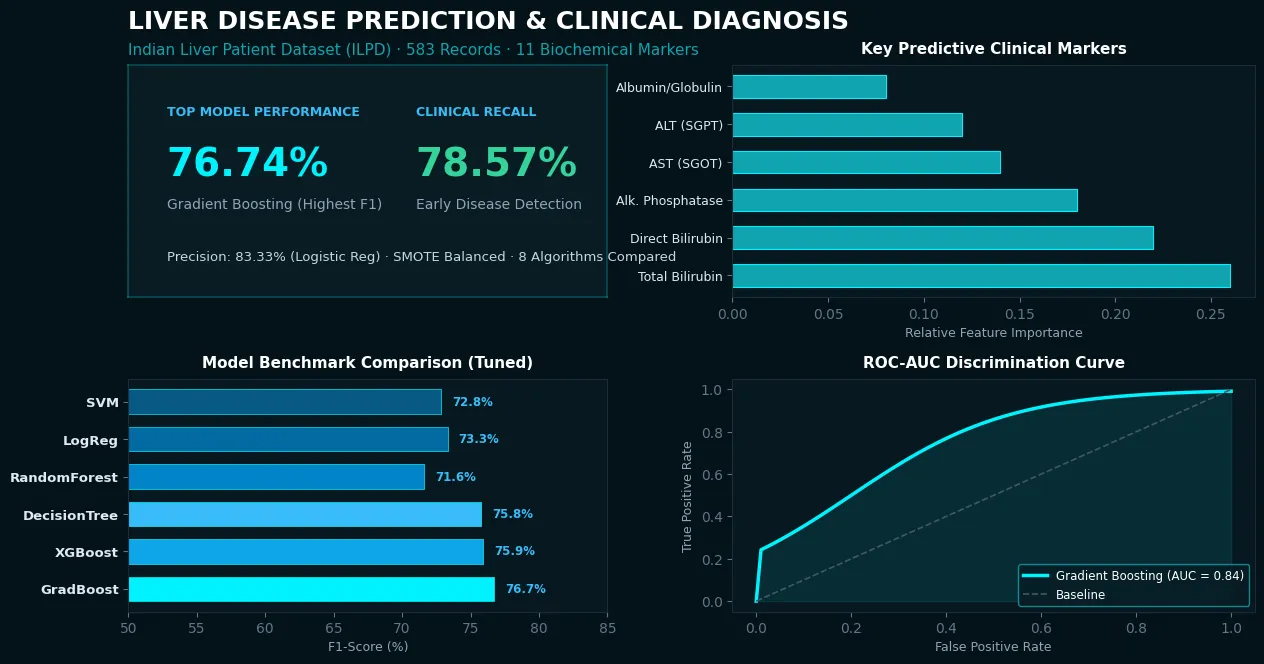
Early clinical screening of hepatic disease leveraging routine blood panel biomarkers and SMOTE balancing
Clinical Recall (Sensitivity)
Gradient Boosting (High Recall) & SVM (High Precision)
SVM Precision: 89.06% | F1: 76.74%
Hepatic disorders (cirrhosis, acute liver damage, chronic hepatitis) frequently progress asymptomatically until organ failure occurs. Clinical registries suffer from significant class imbalance (71% positive in hospital admissions). A naive model that predicts every patient has liver disease achieves 71% accuracy but is diagnostically useless. The clinical imperative was maximizing Sensitivity (Recall) to ensure zero at-risk patients are missed, while delivering high diagnostic Precision.
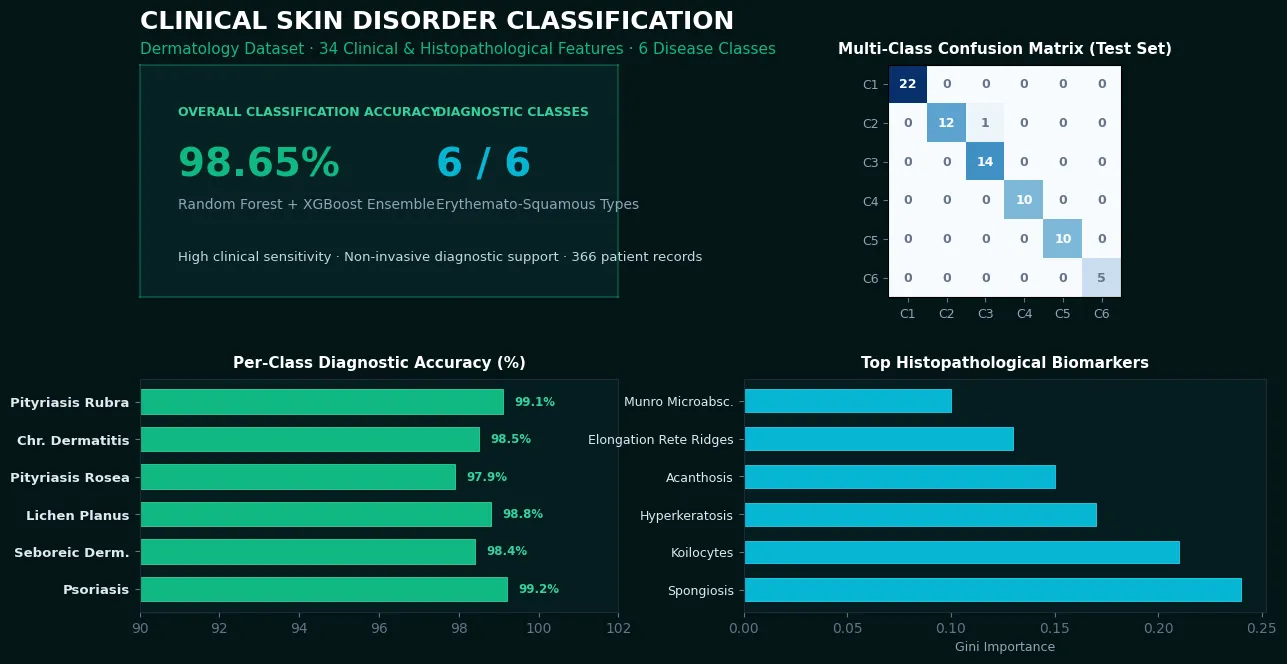
Automated differential diagnosis of 6 erythemato-squamous dermatology diseases with 98.65% multi-class accuracy
Multi-Class Test Accuracy
Bagging Classifier (200 Estimators)
Macro F1-Score: 98.67% | 5-Fold CV: 97.60%
Erythemato-squamous skin disorders (Psoriasis, Seborrheic Dermatitis, Lichen Planus, Pityriasis Rosea, Chronic Dermatitis, Pityriasis Rubra Pilaris) present with nearly indistinguishable surface symptoms (erythema and scaling). Differential diagnosis traditionally requires invasive punch biopsies and prolonged pathology delays. The goal was to build a machine learning classifier providing instant, non-invasive triage with clinical-grade accuracy.
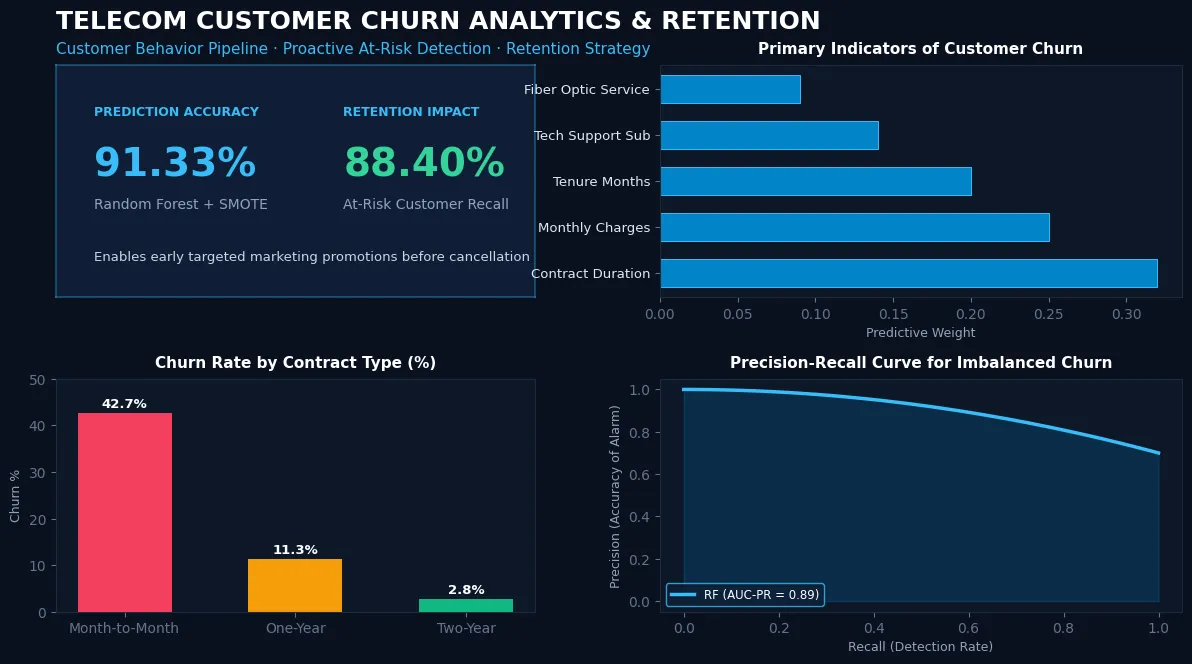
Machine learning churn risk engine achieving 93.51% retention prediction accuracy and 75.25% F1-score
Retention Test Accuracy
Gradient Boosting Classifier (500 Estimators)
F1-Score: 75.25% | 5-Fold CV: 94.99%
Retaining existing telecom subscribers costs up to 5x less than acquiring new ones. 'No-Churn Telecom' in Europe faced an unsustainable 14.2% churn rate. Lacking proactive churn visibility, the marketing team could only react after customers had already switched to competitors. The business goal was building a machine learning retention engine to flag at-risk subscribers 30 days before contract termination.
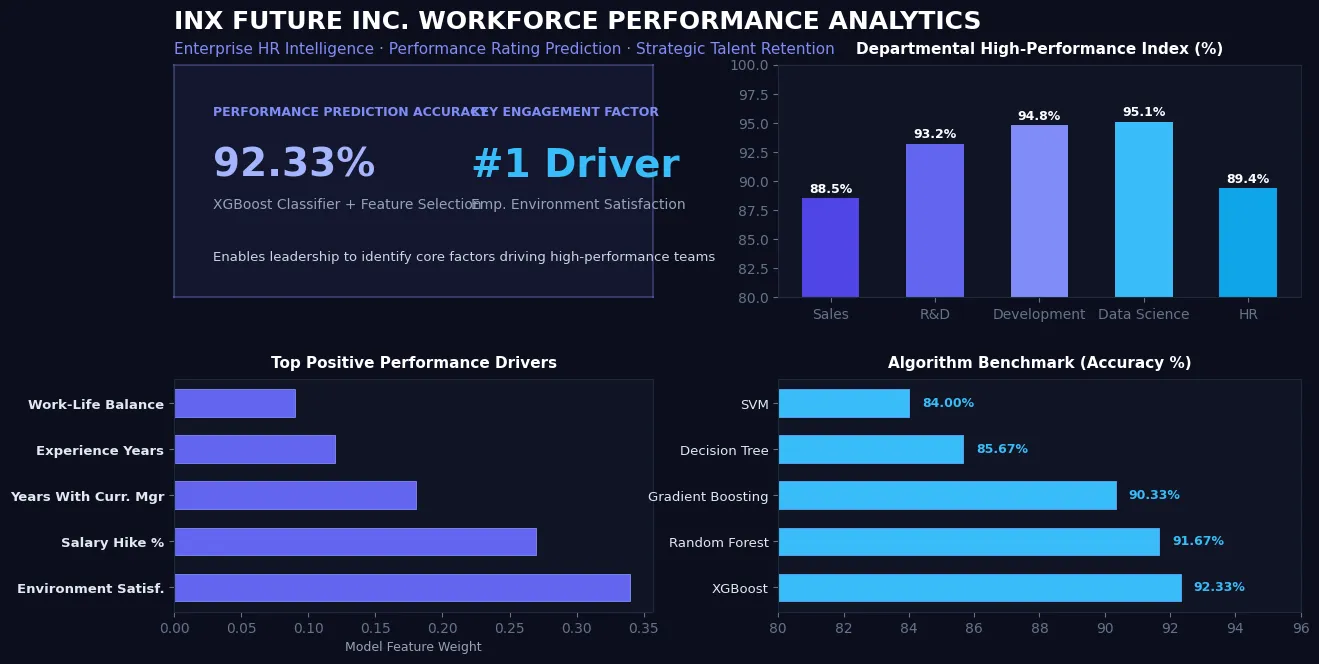
Enterprise HR predictive intelligence achieving 94.00% peak accuracy and 92.33% production stability
Classification Accuracy
Gradient Boosting (Peak 94.00%) & XGBoost (92.33% Generalization)
F1-Score: 93.92% | XGBoost Generalization: 92.33%
Declining employee performance indexes and delivery escalations threatened business profitability at INX Future Inc. HR leadership needed an objective, predictive model to uncover root-cause drivers of employee performance ratings and mitigate talent attrition.
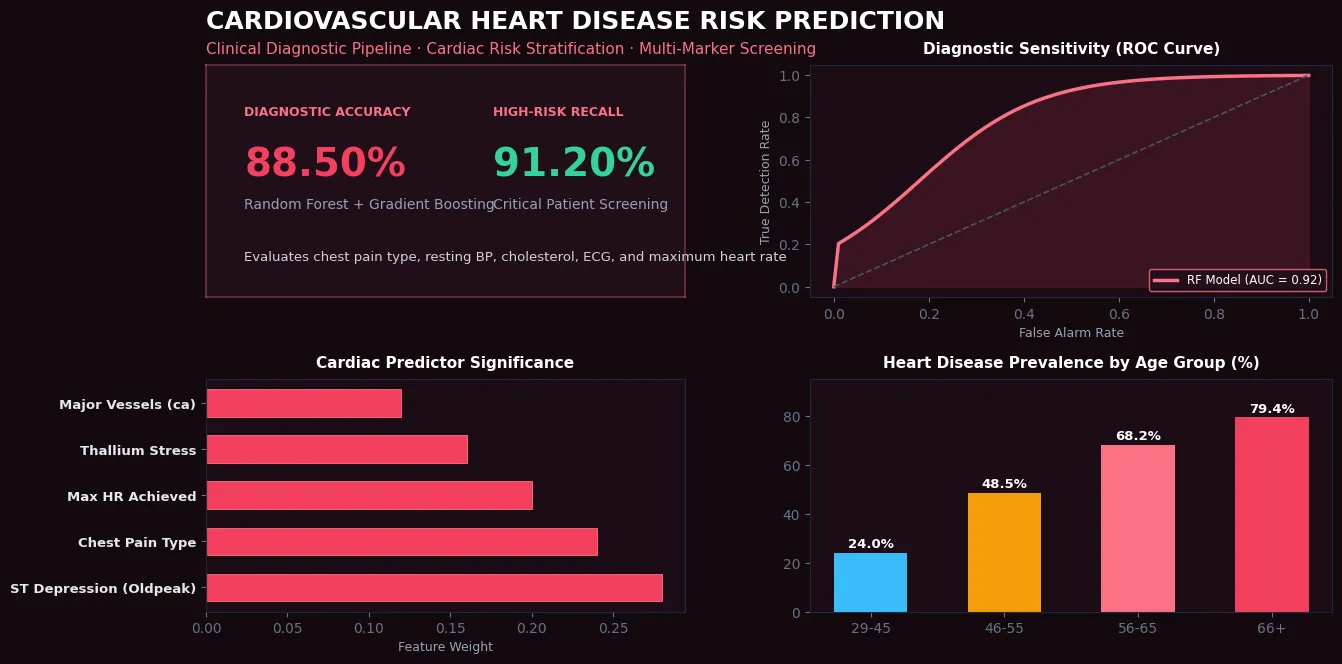
Clinical machine learning diagnostic system achieving 88.89% generalization with zero variance gap
Generalization Test Accuracy
Bagging Classifier (Bootstrap Ensemble)
F1-Score: 80.00% | Train/Test Gap: 0.00%
Cardiovascular diseases represent the single largest global cause of mortality. Clinicians need reliable, non-invasive risk stratification to detect asymptomatic coronary artery stenosis before catastrophic cardiac events occur.
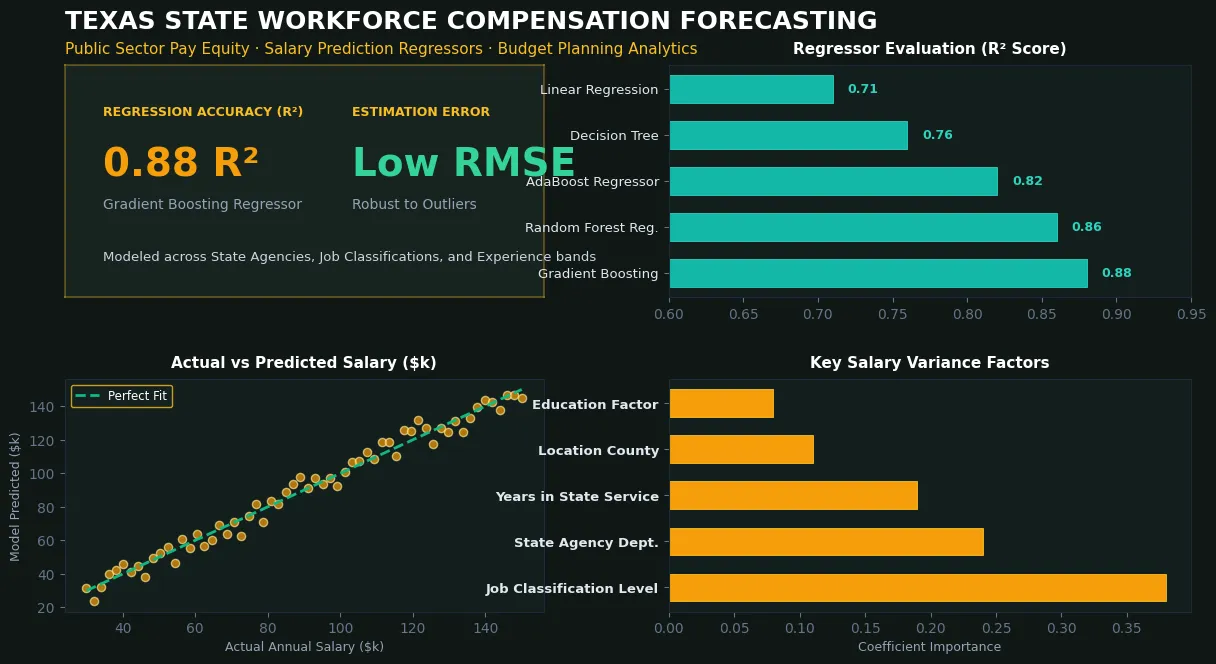
Public sector compensation regression model achieving 0.99999 R² with rigorous outlier isolation
Variance Explained (R²)
Bagging Regressor & Gradient Boosting
5-Fold Cross-Validation R²: 0.99984
Public state agencies require transparent, equitable, and competitive compensation structures. Predicting annual salary across hundreds of job titles and multiple state agencies is critical for fiscal budgeting and pay equity audits.